Mike Phillips
Active member
- Dec 5, 2022
- 51,004
- 8
How to MAXIMIZE your DA Polisher
If you own a Porter Cable style Dual Action Polisher, this would include,
First the reason for this article. The reason for this article is because the problem with these tools is that they have a hard time keeping foam buffing pads rotating under pressure.
It is even more difficult for these first generation PC units to keep a foam pad rotating under pressure as the pads become wet with product. The reason for this is because the wet foam acts to absorb and dissipate the power supplied via the Free Floating Spindle Assemble and the result is the pad will stop rotating and simply vibrate or jiggle against the paint.
Now here's why this is a problem...
Most people that get into machine polishing are doing so because they, like millions of other people, have discovered that removing below surface defects out of clear coat finishes is difficult and time consuming to do by hand. For more information on why it's hard to remove swirls, scratches and water spots out of clear coat paints by hand read these two articles,
The practical differences between single stage paints and a clear coat paints
The Free Floating Spindle Assembly - The Story Behind The Story...
Primarily due to the ability of "Discussion Forums" to disseminate information to large demographic and targeted groups of people, over the last 10 years more and more people have learned about the Porter Cable Dual Action Polisher and moved up from working by hand to working with an electric polisher.
Now this is key...
There are 4 primary things you can do with a Porter Cable Dual Action Polisher or similar knock-offs of this tool...
Now follow me on this... for the first two procedures, that is Correction Work, (removing defects), and Polishing Work, (that is refining the results of the correction step and maximizing clarity and gloss), you need the tool to maintain pad rotation while downward pressure is applied to the head of the tool.
Here's why this is important...
The way you remove swirls, scratches and etchings like water spots, also called "Below Surface Defects", is to remove the paint surrounding these types of defects until the highest points of the surface are level with the lowest points of the defects you're trying to remove.
In other words, the way you remove below surface defects is to abrade the paint until it is flat or level.
Paint is removed best, or if you like the fluffy way of saying this, swirls, scratches and water spots are removed best, when the face of the buffing pad is rotating over the surface, not just jiggling or vibrating.
When it comes to applying a wax or paint sealant, it's not important because at this stage of the game you're not trying to remove paint, (remove defects), you're just trying to spread-out a layer of wax or paint sealant and work it into the paint to whatever level is possible and jiggling or vibrating is perfect for this step.
Then if you want to remove dried wax or paint sealant by machine, then you do want the pad rotating again as that is how a microfiber bonnet around a buffing pad works best for removing a thin film of dried wax or paint sealant.
Back to the problem...
The first generation Porter Cable Dual Action Polishers are not very effective at keeping a pad rotating under pressure, especially pads that are thick and larger.
Thick foam acts to absorber and dissipate the power from the tool and we see this as no or reduced pad rotation. When a pad is dry, it rotates best, at least best to whatever its ability is for the size pad. As you work around a car and continually add more product to work over the paint, some of this product or liquid penetrates into the foam and the combination of foam and liquid acts to absorb the power even more than just dry foam alone.
Large foam pads mean more surface area in contact with the paint and the more surface area in contact with the paint the more power is necessary to rotating the face of the pad over the paint.
When everything is working against you, that is when the pad is large, the pad is thick and the pad is wet or saturated with product, the end results is very slow pad rotation and even no pad rotation.
How to maximize pad rotation for the correction and polishing step for 1st Generation Porter Cable Polishers
In a nutshell...
In detail...
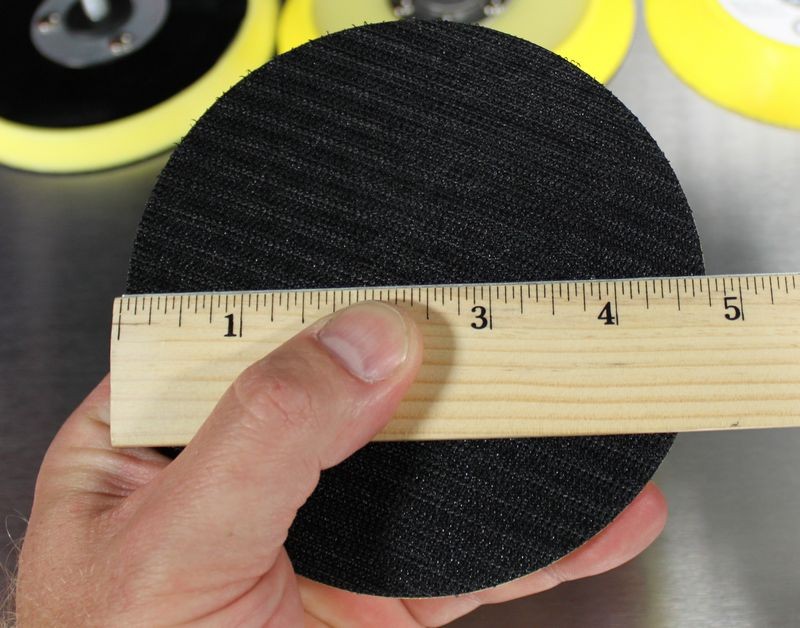
Small Diameter Pads - 5.5" diameter pads are the best balance of size and effectiveness.
This is not a recommendation in concrete, just a good general size recommendation because pad thickness and type are HUGE factors. For example, there are other pads for buffing besides the traditional foam buffing pads. One example is the Surbuf MicroFinger Buffing Pads which are very thin and for this reason you can maintain pad rotating fairly well with a 7" pad on a 1st Generation PC.
Generally speaking however, the 5.5" diameter pad is a good balance between too large and too small. It's true that a 1st Generation PC can easily maintain pad rotation with 4" diameter Spot Repair Pads but this is to small of a size to realistically buff out all the major panels of the average vehicle in a timely manner.
Thin Pads - The thinner the pad, the less foam there is to absorb and dissipate energy.
The thicker the foam the more the cushion and this might be good for a bed, or a couch or a chair, but when trying to maintain pad rotation with a tool that uses a Free Rotating Spindle Assembly, it's a negative feature.
"Thin is in..."
(Yes, you can quote me on that)
You don't want the pad too thin or there will not be enough material to conform to the shapes and contours common to the panels that make up a vehicle. For a really thin pad, you can use an Interface Pad which becomes the cushion for the thin pad and provides the safety margin needed for machine polishing delicate clear coat finishes.
Clean Dry Pads - Being able to switch to a clean, dry pad maintains tool efficiency for maximum pad rotation.
In a perfect world anyone buffing out an entire car would have a collection of clean, dry pads available for their project and after buffing out a single panel, remove the used pad and switch to a clean, dry pad. A clean, dry pad can be a new pad or a used pad, but it's important that it's clean and dry.
Switching to a new pad for each panel of a car also prevents accidental swirls and scratches should a pad become contaminated from the previous panel. For large panels like the hood or roof of larger cars, trucks and s.u.v.'s, this it's completely acceptable and beneficial to use more than one pad per panel. Divide the panel into two sections and use a separate pad for each section of the panel.
Here are my recommendations for 5.5" pads for 1st Generation Porter Cable Dual Action Polishers.
Note these also maximize the ability of 2nd Generation DA Polishers including,
Porter Cable 7424XP, Griot's Garage 6" Random Orbital Polisher and Meguiar's G110v2 and G220v2 which will be introduced some time in the future.
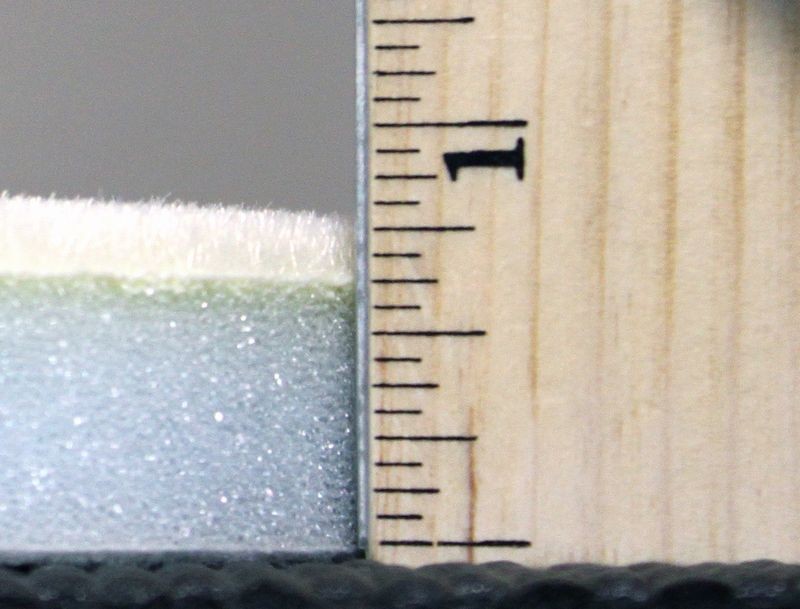
Lake Country
5.5" Flat Pads
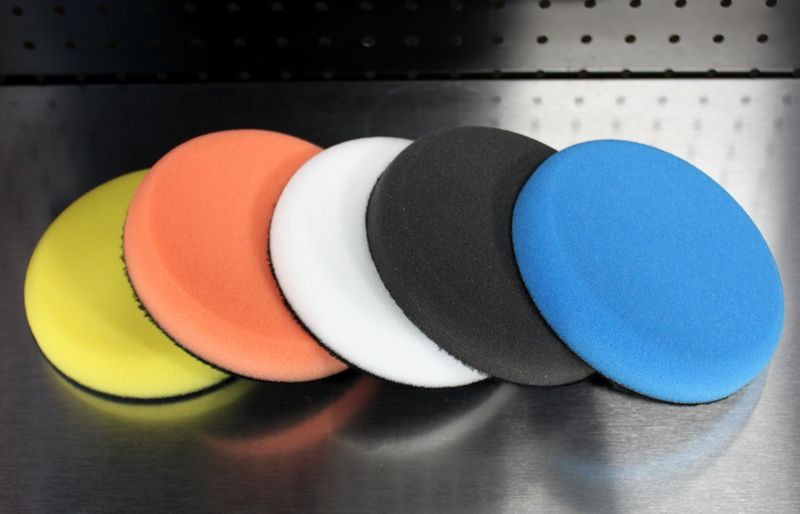
The outer edge of the face of these pads is tapered so they are actually a little under 5" in diameter

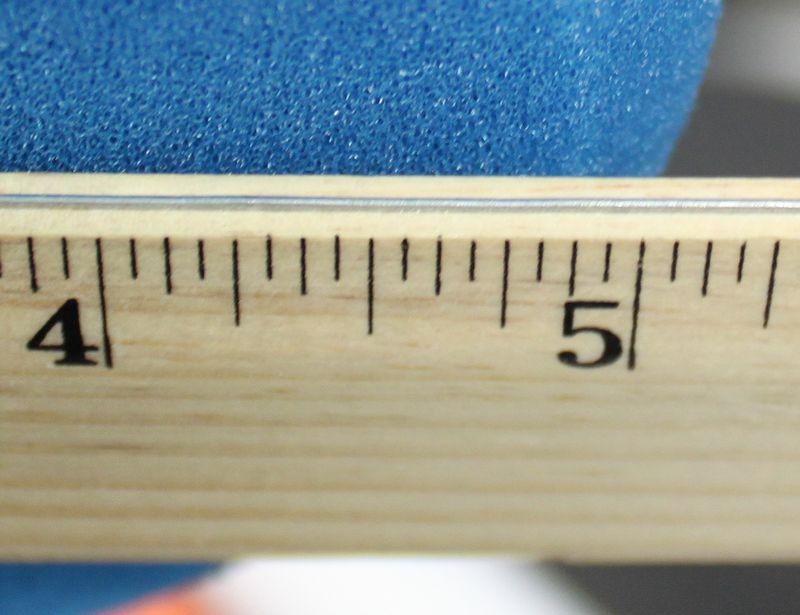
Approximately 7/8" thick

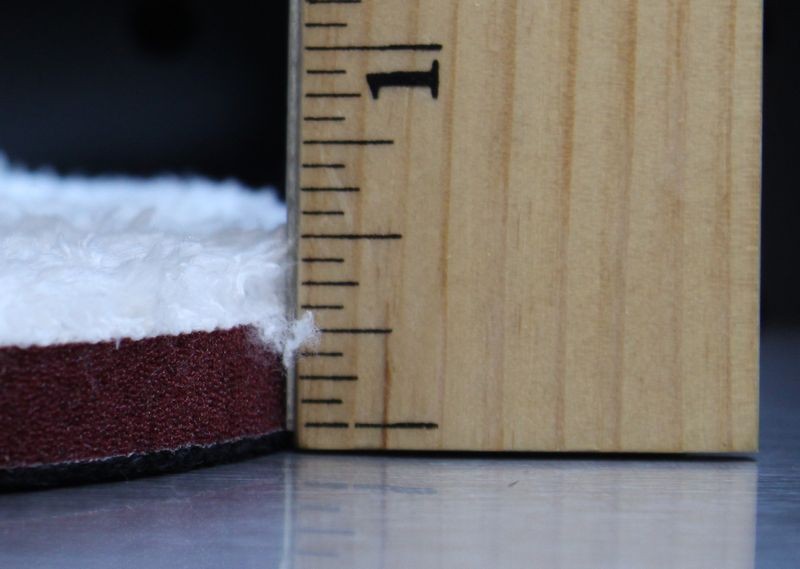
5.5" CCS Pads
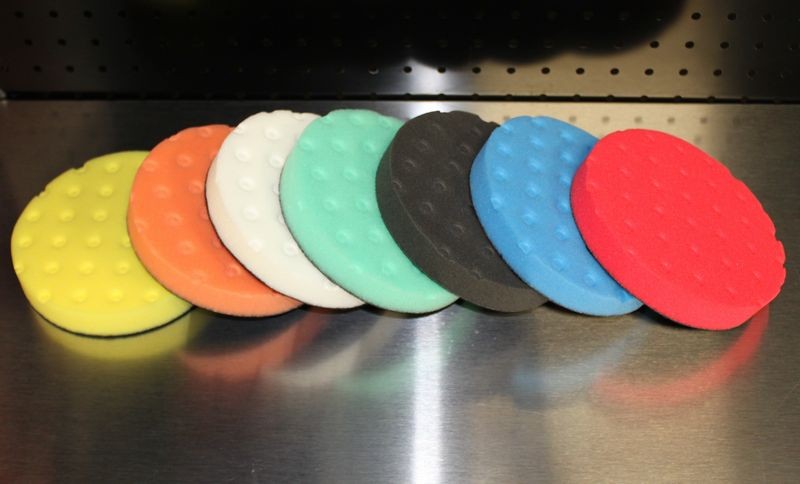
5.5" CCS Pad is right at 5.5" in diameter

Approximately 7/8" thick

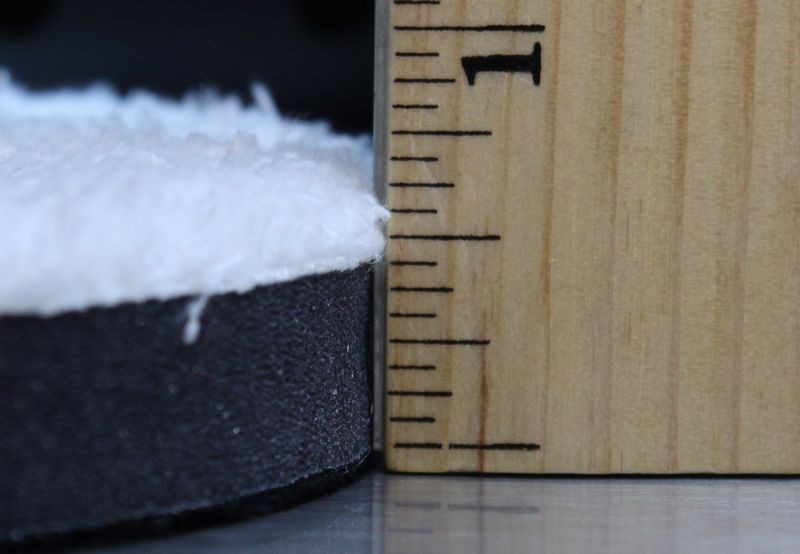
5.5" Hydro-Tech Pads

5.5" Hydro-Tech pads are right at 5.5" in diameter

Approximately 1 1/4" thick
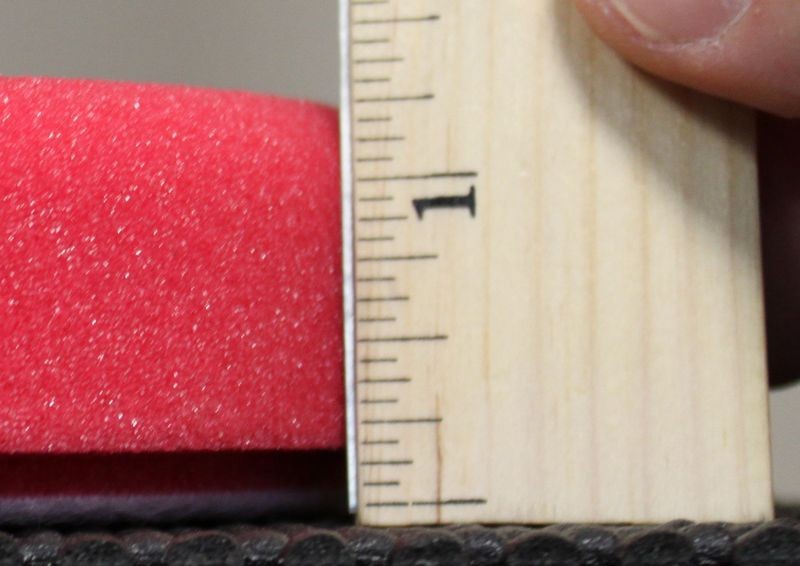
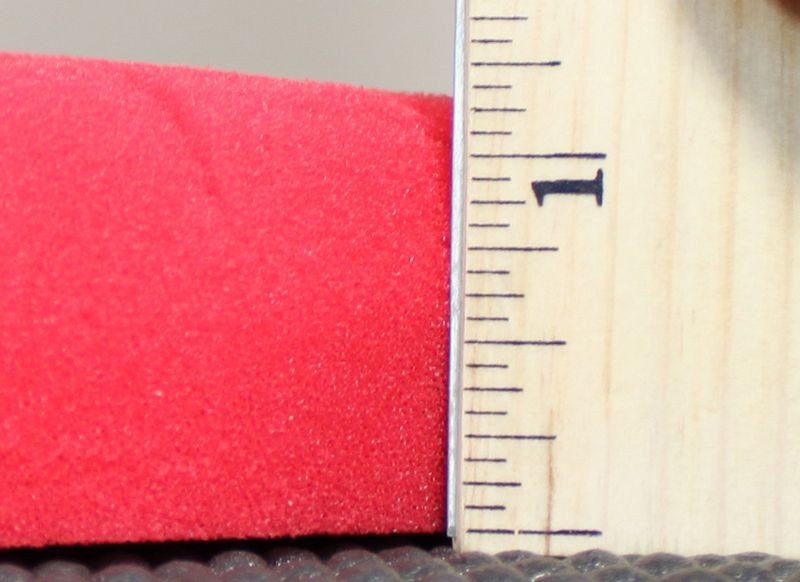
6" Kompressor Pads
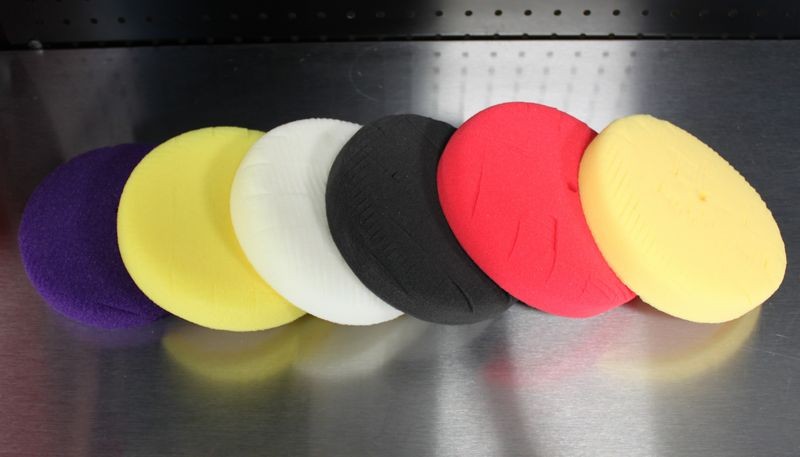
The outer edge of the face of these pads is tapered so they are actually a little under 6" in diameter

Approximately 1 1/4" thick
6" Griot's Garage
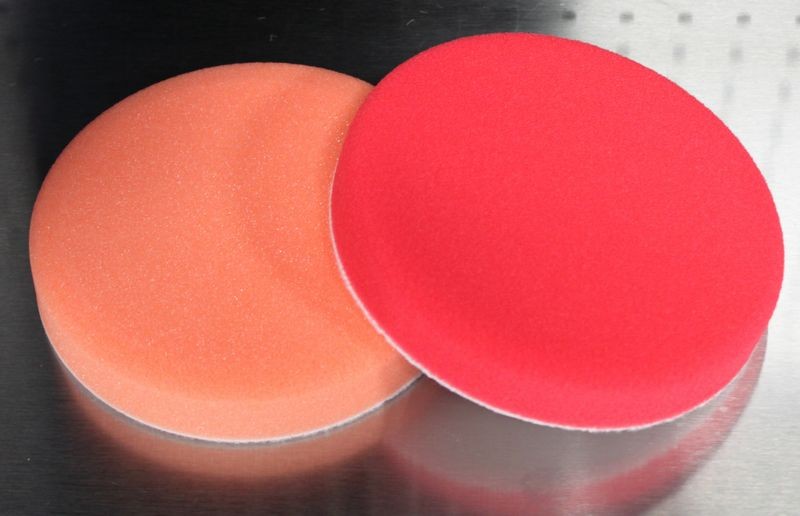
6" Griot's Garage Pads are approximately 6 1/4" in diameter

Approximately 1" thick
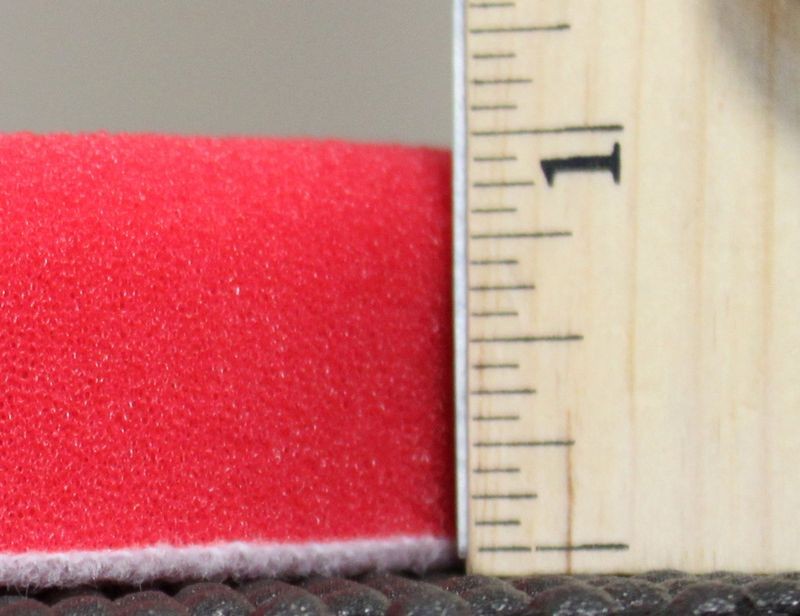
6.5" Cobra Cross Groove Flex Pad

6.5" Cobra pads are tapered around the outer perimeter and measure approximately 6 1/4" in diameter
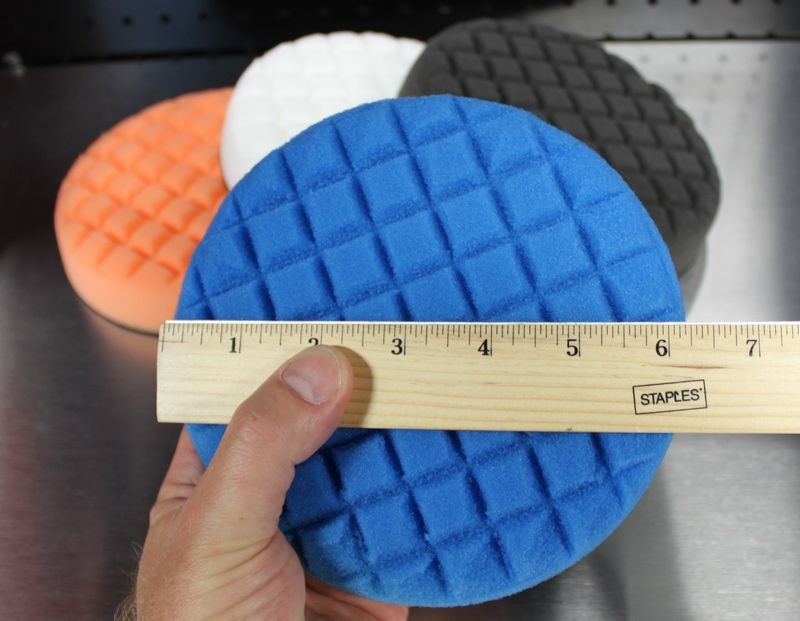
Approximately 1 1/4" thick

6.5" Meguiar's Pads

6.5" Meguiar's pads are slightly tapered around the outer perimeter and measure approximately 6 1/4" in diameter

Approximately 1 1/8" thick
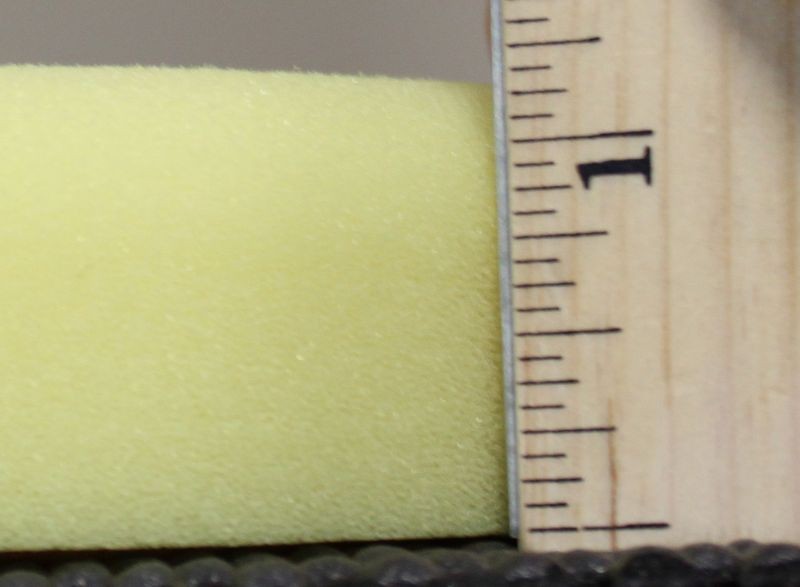
5.5" Surbuf MicroFinger Pads
(For correction work only, must be followed with a foam pad for finishing)
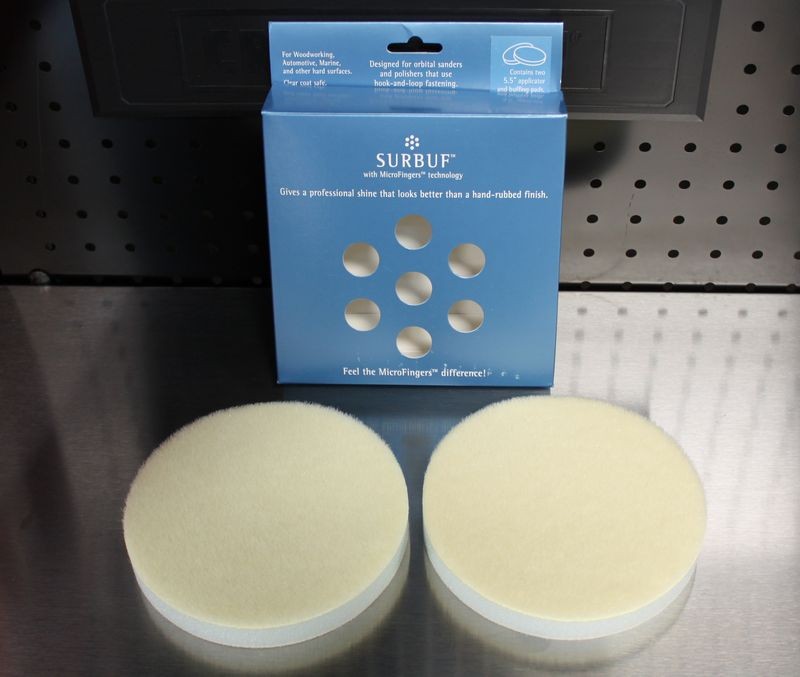
Right on 5 1/2" in diameter
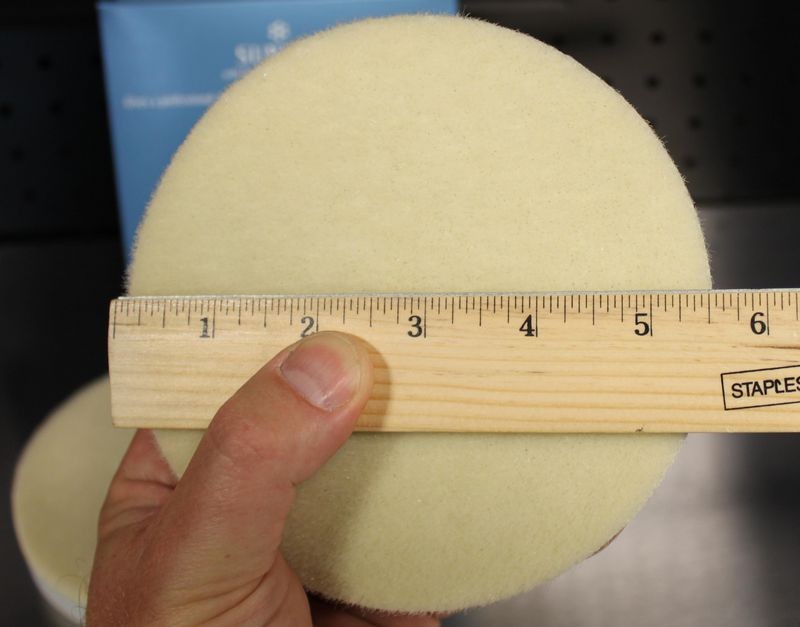
Approximately 3/4" thick

If you own a Porter Cable style Dual Action Polisher, this would include,
- PC 7424
- PC 7336
- Meguiar's G100
First the reason for this article. The reason for this article is because the problem with these tools is that they have a hard time keeping foam buffing pads rotating under pressure.
It is even more difficult for these first generation PC units to keep a foam pad rotating under pressure as the pads become wet with product. The reason for this is because the wet foam acts to absorb and dissipate the power supplied via the Free Floating Spindle Assemble and the result is the pad will stop rotating and simply vibrate or jiggle against the paint.
Now here's why this is a problem...
Most people that get into machine polishing are doing so because they, like millions of other people, have discovered that removing below surface defects out of clear coat finishes is difficult and time consuming to do by hand. For more information on why it's hard to remove swirls, scratches and water spots out of clear coat paints by hand read these two articles,
The practical differences between single stage paints and a clear coat paints
The Free Floating Spindle Assembly - The Story Behind The Story...
Primarily due to the ability of "Discussion Forums" to disseminate information to large demographic and targeted groups of people, over the last 10 years more and more people have learned about the Porter Cable Dual Action Polisher and moved up from working by hand to working with an electric polisher.
Now this is key...
There are 4 primary things you can do with a Porter Cable Dual Action Polisher or similar knock-offs of this tool...
Correction Work - Removing swirls, scratches and water spots or etchings.
Polishing Work - Polishing the paint to a higher level of gloss and clarity after the correction step.
Waxing by Machine - Applying either a wax or a paint sealant by machine because it's faster and the machine is superior as compared to working by hand and working by hand is actually your 4 fingers pushing down on a wax pad.
Removing Wax by Machine - Not everyone goes this far but some people do prefer to remove dried wax or paint sealant by machine.
Polishing Work - Polishing the paint to a higher level of gloss and clarity after the correction step.
Waxing by Machine - Applying either a wax or a paint sealant by machine because it's faster and the machine is superior as compared to working by hand and working by hand is actually your 4 fingers pushing down on a wax pad.
Removing Wax by Machine - Not everyone goes this far but some people do prefer to remove dried wax or paint sealant by machine.
Now follow me on this... for the first two procedures, that is Correction Work, (removing defects), and Polishing Work, (that is refining the results of the correction step and maximizing clarity and gloss), you need the tool to maintain pad rotation while downward pressure is applied to the head of the tool.
Here's why this is important...
The way you remove swirls, scratches and etchings like water spots, also called "Below Surface Defects", is to remove the paint surrounding these types of defects until the highest points of the surface are level with the lowest points of the defects you're trying to remove.
In other words, the way you remove below surface defects is to abrade the paint until it is flat or level.
Paint is removed best, or if you like the fluffy way of saying this, swirls, scratches and water spots are removed best, when the face of the buffing pad is rotating over the surface, not just jiggling or vibrating.
When it comes to applying a wax or paint sealant, it's not important because at this stage of the game you're not trying to remove paint, (remove defects), you're just trying to spread-out a layer of wax or paint sealant and work it into the paint to whatever level is possible and jiggling or vibrating is perfect for this step.
Then if you want to remove dried wax or paint sealant by machine, then you do want the pad rotating again as that is how a microfiber bonnet around a buffing pad works best for removing a thin film of dried wax or paint sealant.
Back to the problem...
The first generation Porter Cable Dual Action Polishers are not very effective at keeping a pad rotating under pressure, especially pads that are thick and larger.
Thick foam acts to absorber and dissipate the power from the tool and we see this as no or reduced pad rotation. When a pad is dry, it rotates best, at least best to whatever its ability is for the size pad. As you work around a car and continually add more product to work over the paint, some of this product or liquid penetrates into the foam and the combination of foam and liquid acts to absorb the power even more than just dry foam alone.
Large foam pads mean more surface area in contact with the paint and the more surface area in contact with the paint the more power is necessary to rotating the face of the pad over the paint.
When everything is working against you, that is when the pad is large, the pad is thick and the pad is wet or saturated with product, the end results is very slow pad rotation and even no pad rotation.
How to maximize pad rotation for the correction and polishing step for 1st Generation Porter Cable Polishers
In a nutshell...
- Small Diameter Pads - 5.5" diameter pads are the best balance of size and effectiveness.
- Thin Pads - The thinner the pad, the less foam there is to absorb and dissipate energy.
- Clean Dry Pads - Being able to switch to a clean, dry pad maintains tool efficiency for maximum pad rotation.
In detail...
Small Diameter Pads - 5.5" diameter pads are the best balance of size and effectiveness.
This is not a recommendation in concrete, just a good general size recommendation because pad thickness and type are HUGE factors. For example, there are other pads for buffing besides the traditional foam buffing pads. One example is the Surbuf MicroFinger Buffing Pads which are very thin and for this reason you can maintain pad rotating fairly well with a 7" pad on a 1st Generation PC.
Generally speaking however, the 5.5" diameter pad is a good balance between too large and too small. It's true that a 1st Generation PC can easily maintain pad rotation with 4" diameter Spot Repair Pads but this is to small of a size to realistically buff out all the major panels of the average vehicle in a timely manner.
Thin Pads - The thinner the pad, the less foam there is to absorb and dissipate energy.
The thicker the foam the more the cushion and this might be good for a bed, or a couch or a chair, but when trying to maintain pad rotation with a tool that uses a Free Rotating Spindle Assembly, it's a negative feature.
"Thin is in..."
(Yes, you can quote me on that)
You don't want the pad too thin or there will not be enough material to conform to the shapes and contours common to the panels that make up a vehicle. For a really thin pad, you can use an Interface Pad which becomes the cushion for the thin pad and provides the safety margin needed for machine polishing delicate clear coat finishes.
Clean Dry Pads - Being able to switch to a clean, dry pad maintains tool efficiency for maximum pad rotation.
In a perfect world anyone buffing out an entire car would have a collection of clean, dry pads available for their project and after buffing out a single panel, remove the used pad and switch to a clean, dry pad. A clean, dry pad can be a new pad or a used pad, but it's important that it's clean and dry.
Switching to a new pad for each panel of a car also prevents accidental swirls and scratches should a pad become contaminated from the previous panel. For large panels like the hood or roof of larger cars, trucks and s.u.v.'s, this it's completely acceptable and beneficial to use more than one pad per panel. Divide the panel into two sections and use a separate pad for each section of the panel.
Panel = A single door, hood, fender, etc.
Section - A portion of a panel
Here are my recommendations for 5.5" pads for 1st Generation Porter Cable Dual Action Polishers.
Note these also maximize the ability of 2nd Generation DA Polishers including,
Porter Cable 7424XP, Griot's Garage 6" Random Orbital Polisher and Meguiar's G110v2 and G220v2 which will be introduced some time in the future.
Lake Country
5.5" Flat Pads
The outer edge of the face of these pads is tapered so they are actually a little under 5" in diameter
Approximately 7/8" thick
5.5" CCS Pads
5.5" CCS Pad is right at 5.5" in diameter
Approximately 7/8" thick
5.5" Hydro-Tech Pads
5.5" Hydro-Tech pads are right at 5.5" in diameter
Approximately 1 1/4" thick
6" Kompressor Pads
The outer edge of the face of these pads is tapered so they are actually a little under 6" in diameter
Approximately 1 1/4" thick
6" Griot's Garage
6" Griot's Garage Pads are approximately 6 1/4" in diameter
Approximately 1" thick
6.5" Cobra Cross Groove Flex Pad
6.5" Cobra pads are tapered around the outer perimeter and measure approximately 6 1/4" in diameter
Approximately 1 1/4" thick
6.5" Meguiar's Pads
6.5" Meguiar's pads are slightly tapered around the outer perimeter and measure approximately 6 1/4" in diameter
Approximately 1 1/8" thick
5.5" Surbuf MicroFinger Pads
(For correction work only, must be followed with a foam pad for finishing)
Right on 5 1/2" in diameter
Approximately 3/4" thick




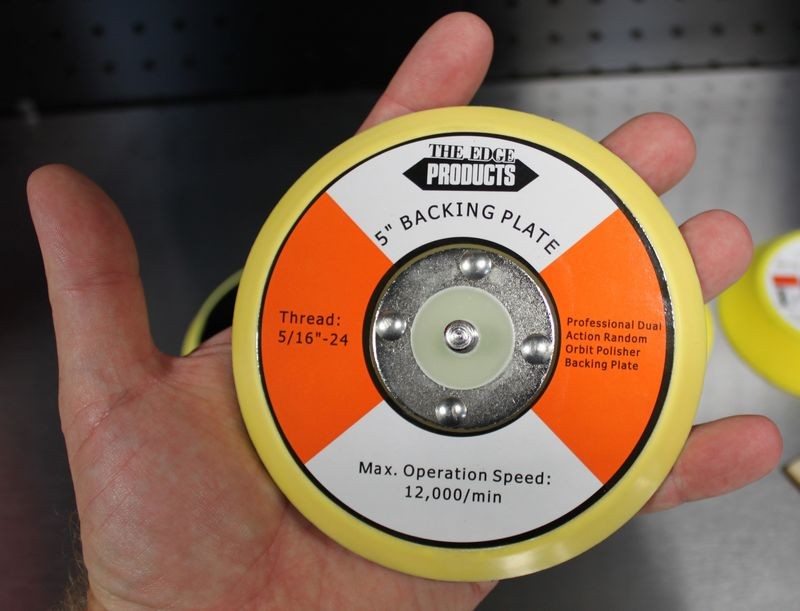
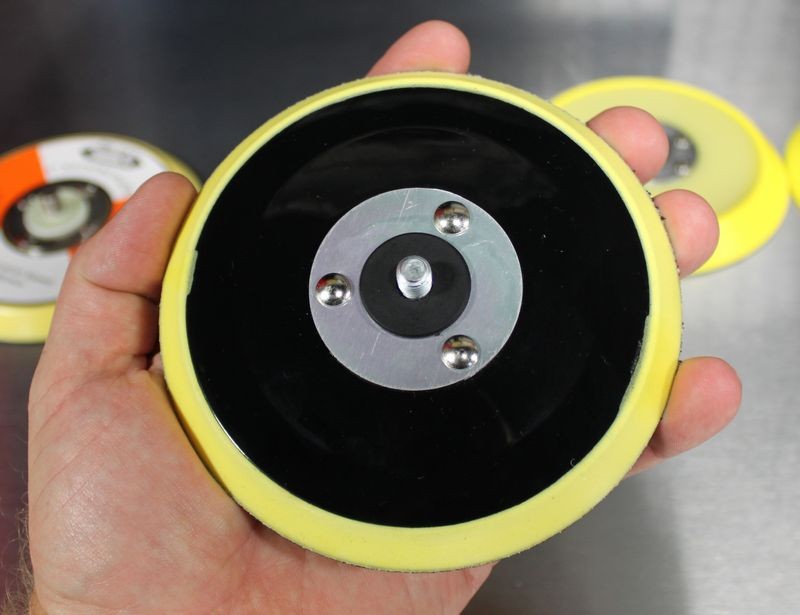
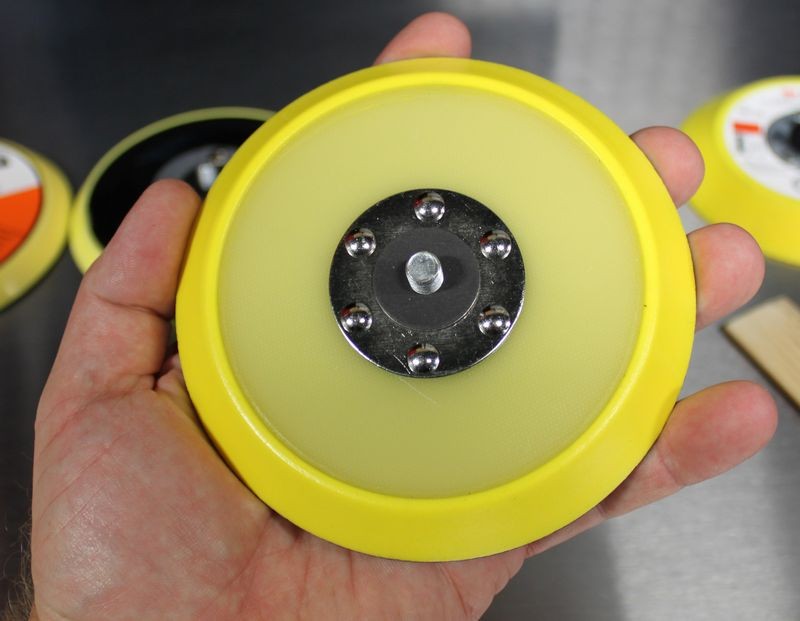
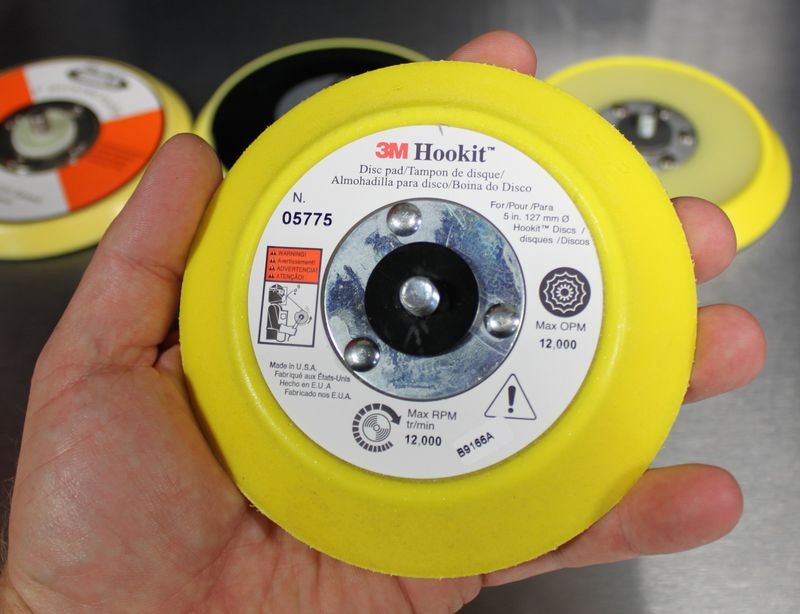


 rops:
rops: